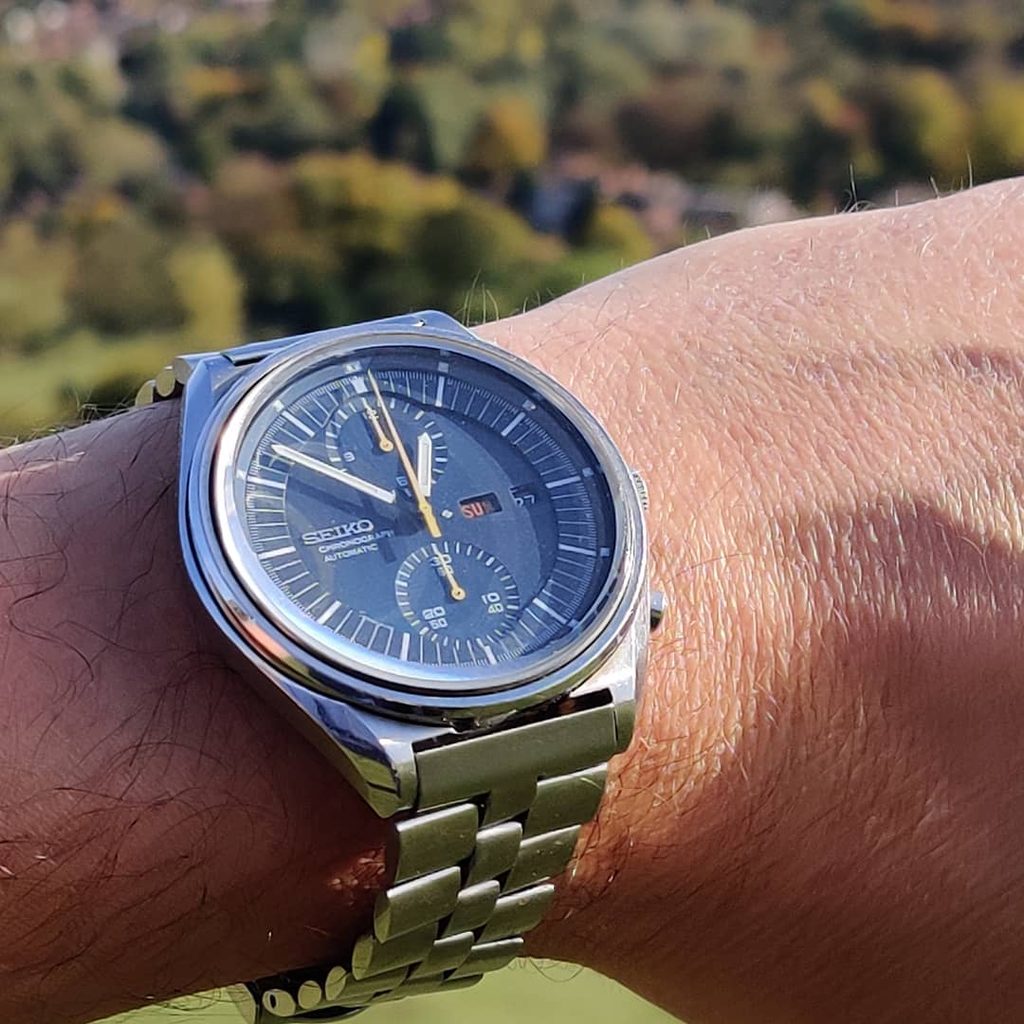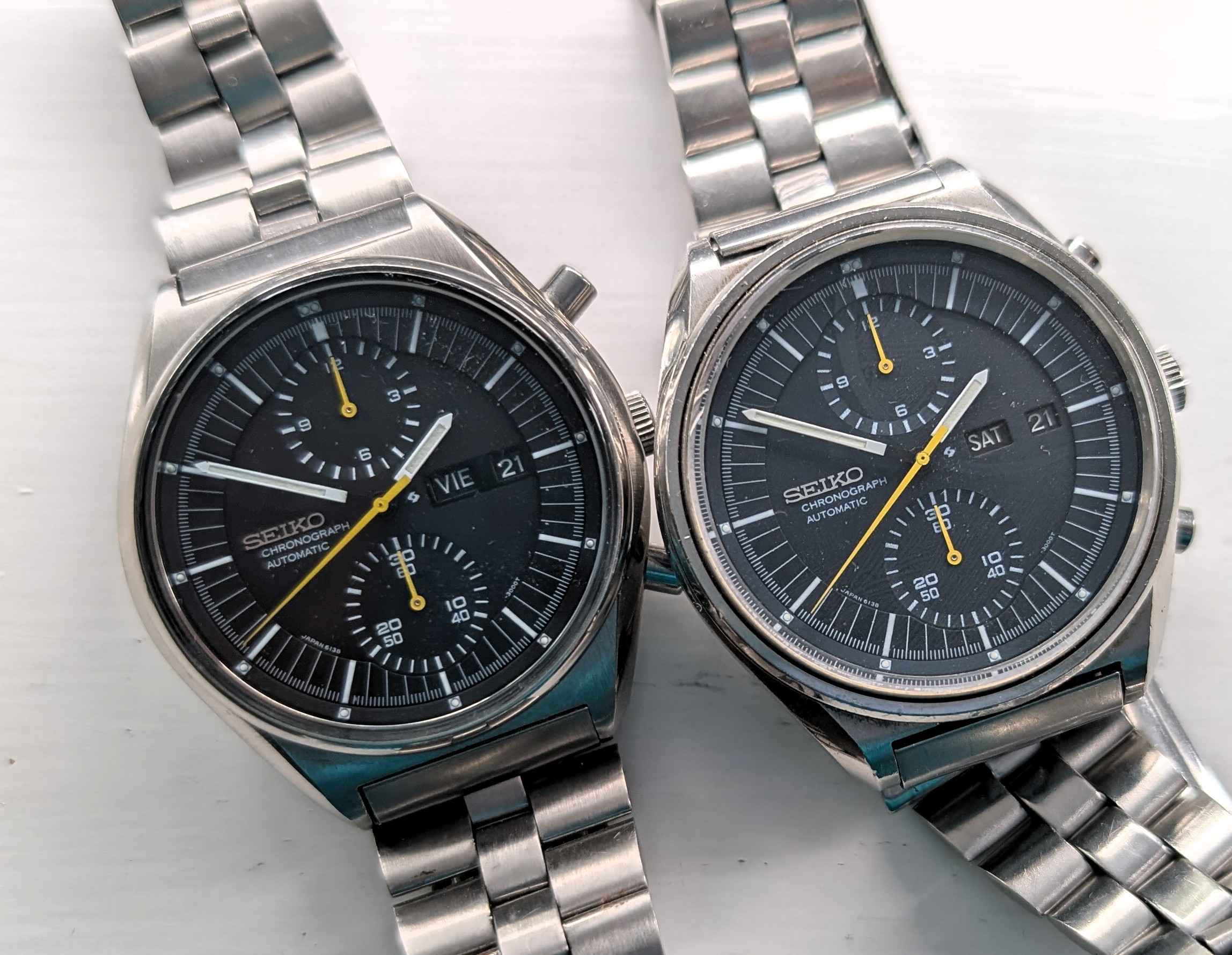
A while ago (Some Seiko 6138s – part 1 and part 2), I wrote about some members of the Seiko 6138 family. These are the bigger brother to the 6139 Pogue/Bruce Lee etc, because they have some extra features and tend to be a bit bigger. There’s an additional chronograph subregister at 12 oclock, allowing the chrono to count 12 hours, and the movement can be hand-wound as opposed to the 6139 which is automatic only. The extra complications also mean the jewel count is 21, whereas most 6139s are 17 (outside Japan, basically).
The 6138s I’ve featured previously are only 2 of a pretty wide range, all of which have nicknames: I wrote about the Panda (still my favourite) and the Kakume. There’s a good overview of the whole family at Vintage Icons: A Seiko 6138 Chronograph Collector’s Guide and they range in value from pretty affordable to quite expensive; the most valuable being the “Baby Panda” 6138-800x and probably the least valuable being the one we have here – the 6138-300x aka “Jumbo”. Ironically, outside of Japan, the 300x was the most expensive 6138 in its day…
Why Jumbo?
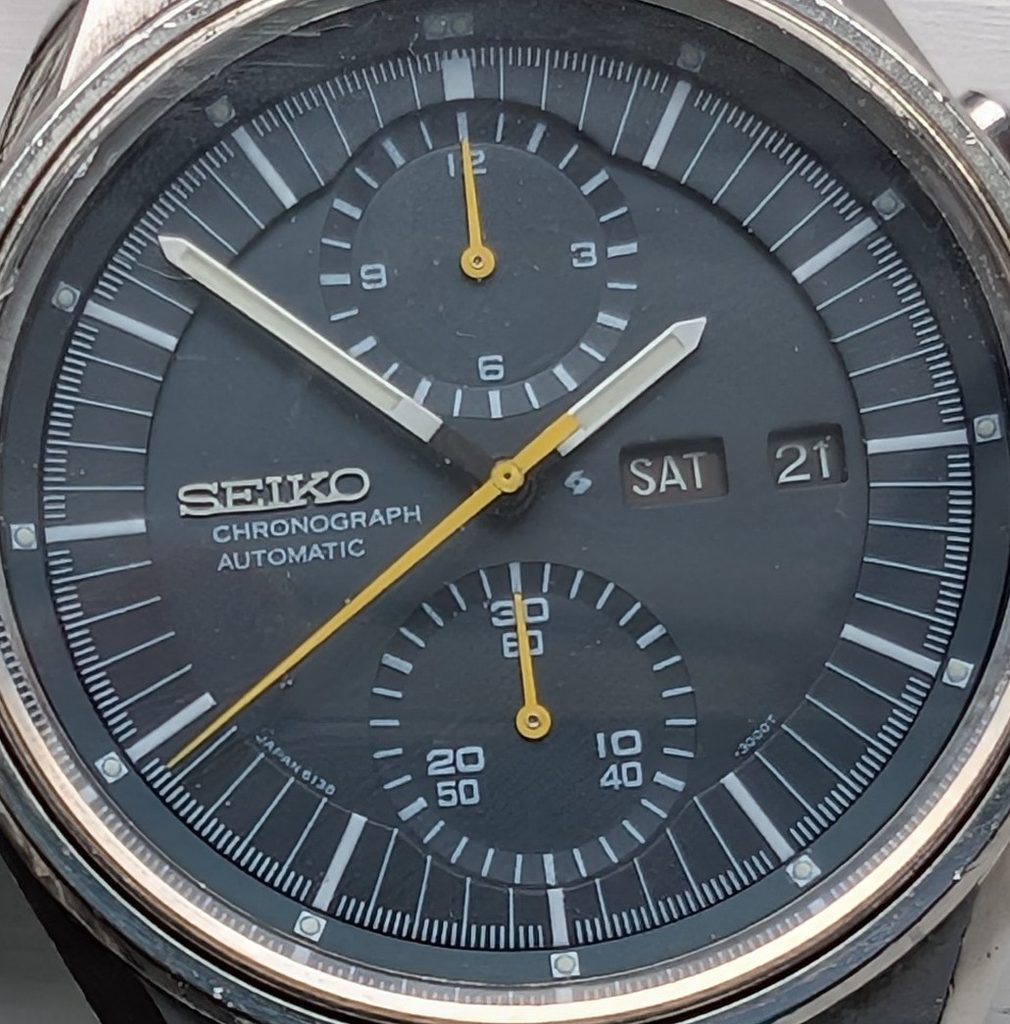
As with any nickname, there could be various reasons why it’s called thus – the Panda is pretty self explanatory, and the Jumbo is largely because of its size. It’s a big, thick watch – 42mm across and sits about 15mm from the wrist. But the key aspect of the Jumbo is the size of the dial in relation to the case – it almost completely fills the width of the watch. The dial is a multi-layered affair as well – the subdials are dished, the minute track is raised (and the subdials eat into it) and there’s a small chapter ring as well.
The variants
Like most Seiko models, there are varieties – the earliest would be the 6138-3000, dating from late 1971 or early 72. Seiko’s model numbers are the movement – 6138 – followed by the case – 300x, in this case. There was one 3000 for JDM and another for export markets (the JDM variant featuring 23 jewels and having a slightly different dial), and 3009 for Americas. These apparently gave way to the 3002 model for the RoW and 3005 for the Americas, in 1973 or thereabouts. American market watches have English/Spanish day wheels – others are a mixture. There’s also a 3003 that appeared late in the series – 1977 or 78.
The early watches are identifiable by having a slightly different case shape than later models – the lugs are a bit more prominent so you’ll see the bracelet end links finish and there’s a strip of case before the outer bezel that surrounds the crystal. The most common 6138-3002, which can date to 1977 or so, has a slightly smaller case where the bezel extends right into the gap between the lugs…
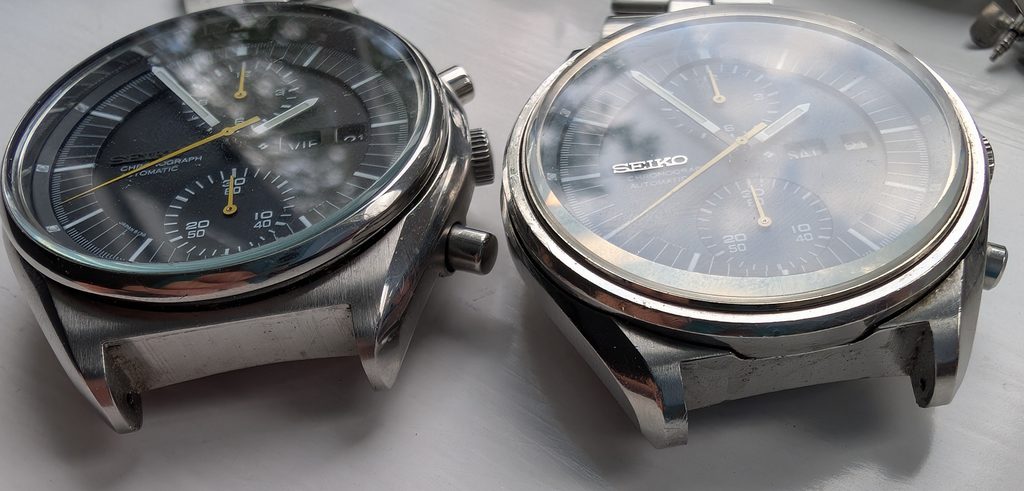
… which is identifiable with the bracelet still on.
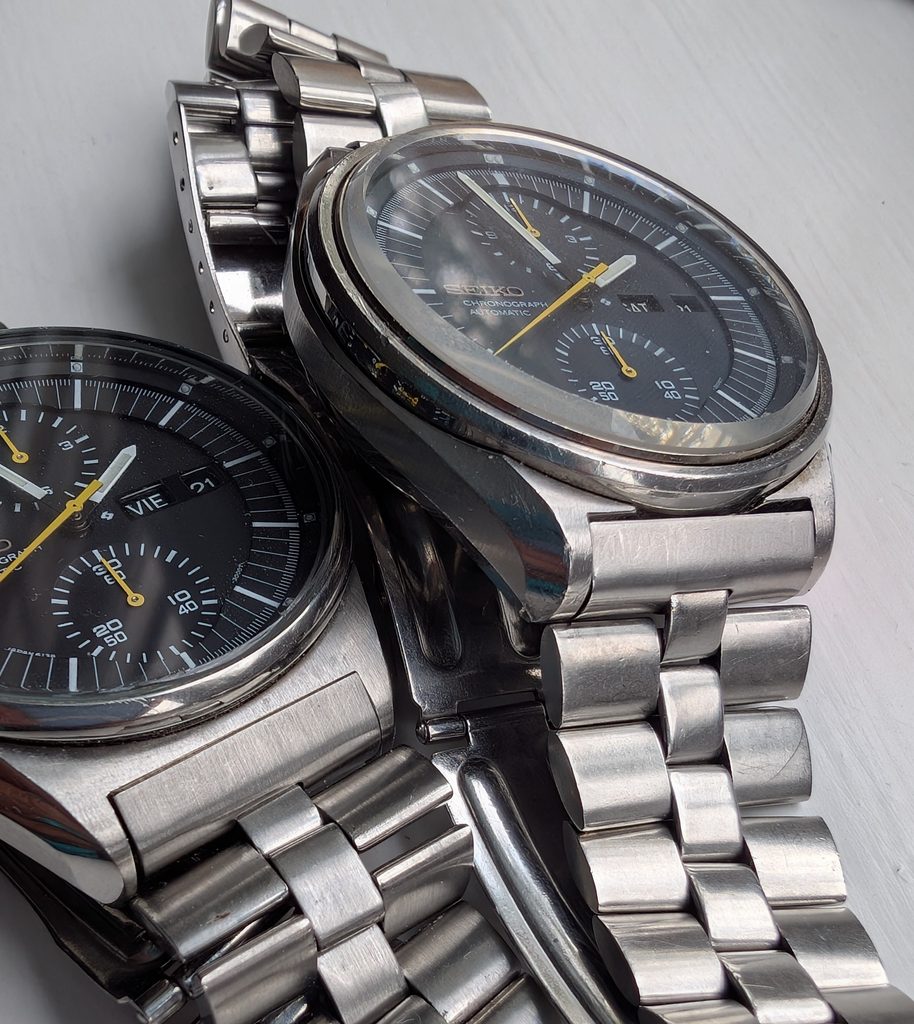
[6138-3009 from Feb 1972 on the left, 6138-3002 from Jan 1975 on the right]
The dials
Firstly, there are two dial colours – flat black/grey and a radiant blue/green which is often referred to as “petrol blue” (I’d say it’s really teal).
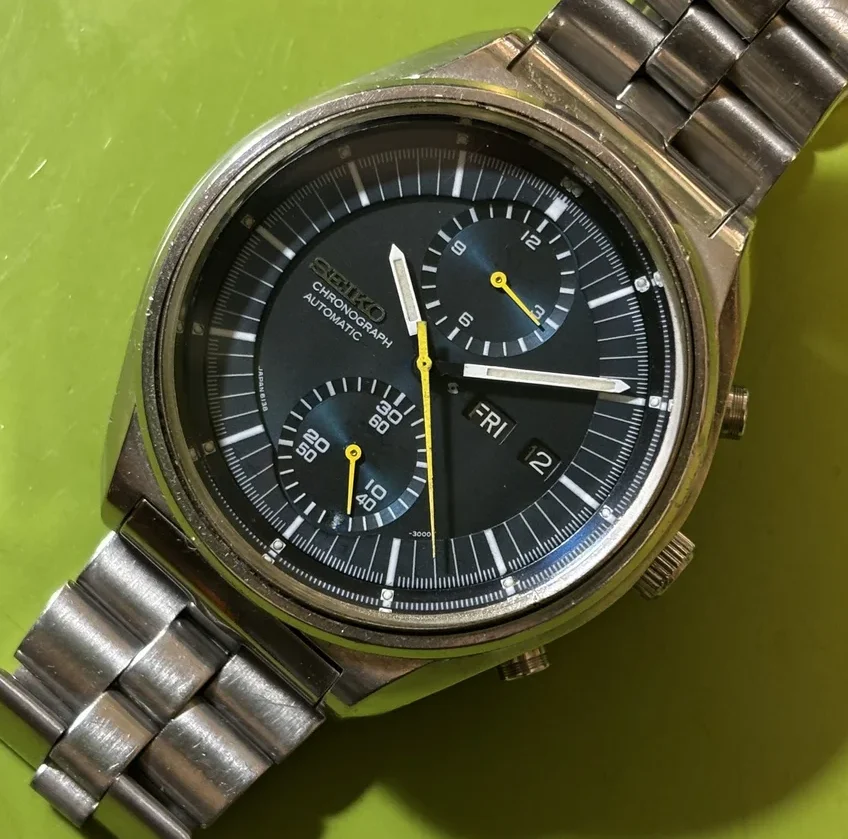
Image from Klein Vintage Watch – a Petrol Blue 6138-3005, previously sold Seiko 6138-3005 ‘Jumbo’ Petrol 6/75, Serviced, original, NOS crystal — Klein Vintage Watch
The petrol blue dials appear to the same as the black ones – ie. same dial code/layout etc – just a different finish. The black/grey dial is much more common so I’ll concentrate on those for the rest of the discussion.
JDM watches have a jewel count on the dial, and the dial code on the lower right is 3010T, whereas RoW market 21 jewel watches don’t have a jewel count and their dial code is 3000T, like both the 3009 and 3002 shown earlier.
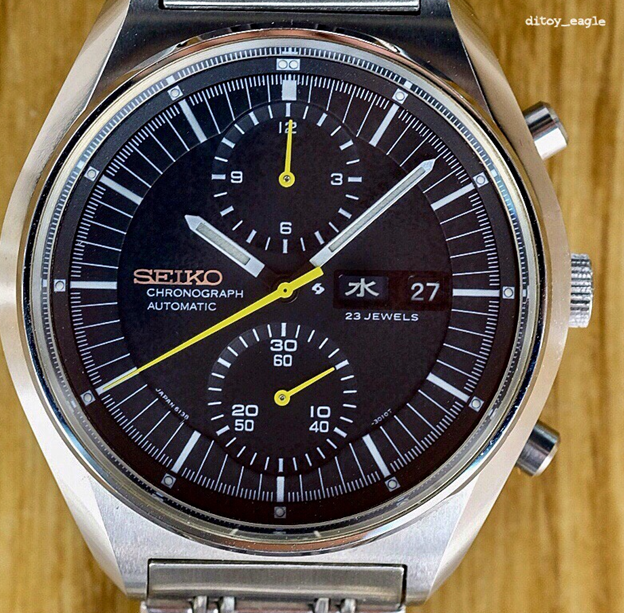
Image from user dtoy_eagle at https://www.thewatchsite.com/threads/the-jdm-6138-3000-jumbo-23-jewels.301522
Otherwise, the dials appear to be the same – there’s no WATER 70m RESIST nonsense or anything else to differentiate the ages, as is sometimes found in other early 1970s Seikos. One distinction which does appear to differentiate watches, though, is the black surround of the day/date windows. On early watches, it’s a lightly glossed black
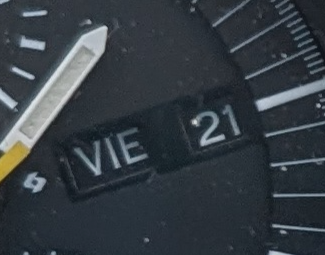
Whereas on later ones, it’s just not there…
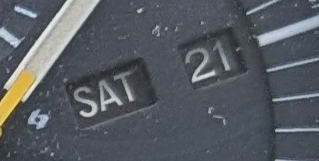
It’s not quite as straightforward as some later (76/77) watches appear to have the surround, whereas others don’t. It’s possible that Seiko outsourced dial manufacture to different factories and some included the surround while others did not, or it might even be that watches intended for different markets were specified slightly differently. We may never know…
Whatever, the Jumbo is a great watch on the wrist. It’s big and clear and quite heavy. In period, it must have seemed huge but compared to some of the big watches available since, it’s actually pretty “normal”.